
What employers are weighing as GLP-1 coverage rolls back
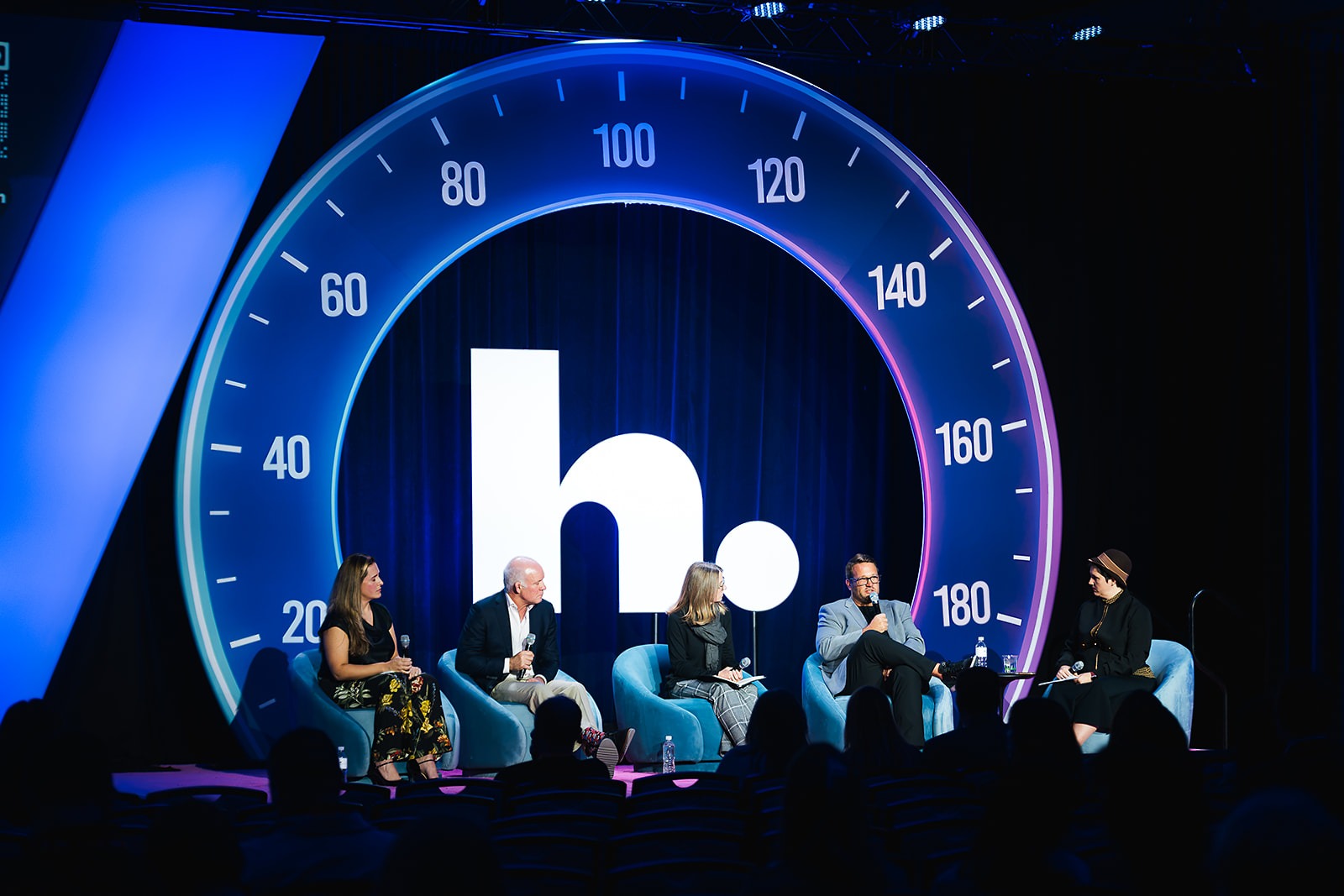
At HLTH USA in Las Vegas this November, I moderated a panel called GLP-1 Fire Drill. GLP-1s have changed obesity care in a few short years. They have also become one of the hardest cost decisions employers face.
I was joined by four leaders who view that decision from different seats. Sara Drake is a partner in the pharmacy practice at Marsh People and Investments and talks to employers about GLP-1s every day. Michelle Manteiga is Benefits Manager at Tivity Health and works on coverage from the employer side. Dr. Timothy Church is Chief Medical Officer of Wondr Health, which offers holistic weight loss support programs for employers. Cody Fair is Chief Commercial Officer at Noom, which has run behavior change programs for more than 15 years.
The decision of whether to cover GLP-1s is much more complicated than a yes or no and it leads to a set of connected choices that evolves as the market evolves. New medications, new indications, new data, the introduction of alternative pricing models like Direct to Patient or Direct to Employer. Any decision that an employer makes today will need to be revisited several times as those factors change. There is also an ongoing debate over what time horizon to judge the return on investment, which impacts decision making.
Below are a few themes from the discussion:
1. Coverage is rolling back
Sara shared new data from Marsh's 2026 National Survey of Employer-Sponsored Health Plans, released the morning of the panel. Among employers with 500 or more employees, the share covering GLP-1s for weight loss fell from 49% to 41% in one year. Among employers with 20,000 or more, it fell from 66% in 2025 to 58% in 2026.
"Essentially, we're seeing this rollback in coverage back to pre-2020 levels," she said.
The savings for those rolling back coverage are real. Michelle said that in plans she has worked on, medication spend dropped about 30% on average after they stopped covering GLP-1s for weight loss.
Sara also urged employers to zoom out and consider this decision in the context of their overall drug spend. In the same survey, total benefit cost per employee rose 7.3% in 2026, and prescription drug spending at large employers rose 9.7%. Sara added that specialty drug spending rose 13.1%. GLP-1s are only part of that rise.
2. ROI depends on price, persistence and who gets access
Tim's math puts the break-even price for the medication at about $300 a month, with the return judged over one year. Few employers look further out than that. As Cody put it, "Nobody cares after a year."
A CVS Health analysis of Aetna claims, released that week, landed close to Tim's numbers. It put the break-even at about $350 a month, modeled over three years. Employers still pay $600 to $800 a month today. His conclusion: "Until we see prices below $300... my math is 85% of employers can't afford this."
Cody named a second lever, which is who gets access. "There actually is an ROI in the population with a BMI over 35," he said.
Persistence is the third. Sara noted that the CVS results were better for people who stayed on the drug at least 80% of the time. Real-world numbers are lower, but rising. Prime Therapeutics data shows one-year persistence of about 63% for people who started in early 2024, up from 33% in 2021. Tim said Wondr is at 94% at one year, by tailoring the dose and managing nausea early.
Michelle added a cost that rarely shows up in the math. In an Aon analysis, medical costs for people on Wegovy and Zepbound rose 23% in their first year, against 10% for non-users. Her read is that people start paying attention to their health and find other conditions. The same study found the curve bends after that. From the second year, medical costs grew 2% for users against 6% for non-users.
The return is also wider than the claims line. "There's also a clinical ROI, and we know that the clinical ROI for these medications is meaningful," Sara said. I'd add fewer sick days and less strain from weight-related conditions like knee and back pain. And in industries competing for talent, Sara said GLP-1 coverage is still part of the offer.
3. Employers are finding new ways to pay
Between full coverage and none, employers now have options. In a direct-to-employer (DTE) model, the employer buys the drug at a price set with the manufacturer, outside its pharmacy benefit manager (PBM). The employer then sets its own split of the cost with employees.
Sara said most employers she sees aim for about 50%, or around $200 a month, and the member pays the rest. Cody said all of Noom's upcoming DTE starts chose a 50/50 split. He expects that model to grow about seven times year over year at Noom. Employers that carve the drug out of the PBM this way save $400 to $500 per script per month, depending on the cost share. Members pay more, but they keep access.
DTE has barriers. Sara said it adds another vendor to manage, and PBMs would rather keep dispensing in house. Carving out can also run into exclusivity clauses and changes to rebate guarantees. She sees the most DTE interest from employers that don't cover GLP-1s today.
The other path is direct-to-consumer (DTC), and Sara sees more interest there so far. The employer offers a lifestyle support program which is covered, but doesn’t pay for the medication, so the member pays 100% of the drug. Consumer prices start around $149 a month, but that's for early doses and it rises to $449 at higher doses.
I asked why an employer wouldn't just give a cash stipend which they can use toward cash pay. Michelle wasn't keen. "I don't like giving people cash and hoping they'll do what they say they're going to do with it."
4. The drug opens a window for behavior change
We discussed what type of wraparound support patients on GLP-1s most need. Cody's response struck me by surprise, it’s actually non-food related behavior change. "What we've found is that GLP-1s open up a habit window that did not exist previously."
The reason is willpower. "Willpower is ultimately a finite resource," he said. Before the drug, people spend it fighting food noise. Once the GLP-1 quiets that noise, they have more left for new habits.
Noom's data backs this up. Members who engage more stay on the medication longer and lose more weight. If they stop the drug, for supply, side effects or choice, their weight loss holds up better.
Tim pushed the point further. The first three to four months are about nausea and getting the dose right. After that, people who have lost a lot of weight face new problems. Others treat them differently, comment on their weight, relationships change. "These are adult topics that are part of a good support program," he said.
5. Support has to be real and in real time
Cody said people on GLP-1s want three kinds of support. They want a community of people in the same situation. They want a clinician who understands GLP-1s, and a health coach who understands them.
Tim added that the support has to come fast. Someone who wakes up to hair on their pillow wants an answer that morning. Hair loss comes from losing weight too fast, he said, not specifically from the drug, and it grows back. On muscle, his message was to focus on strength over lean mass, with both resistance training and aerobic exercise.
Without that support, the drug alone often fails. "Sending someone out there to take the medication on their own without any support around them is a recipe for disaster," Cody said. People stop the drug, or lose muscle and regain the weight.
For Michelle, that's why partnerships make sense. "Pairing coverage with companies who really support that lifestyle change... I think that's the best way to go. It gives us that opportunity to set people up for success."
What do employers look for in a partner? Michelle's first test is that any program works for every employee, since the plan must be equally accessible to all. Sara looks at how members are reached: how much is app-based or AI-based versus a person, and whether a dietitian or provider leads the care.
6. The story is bigger than weight loss
Tim compared GLP-1s to statins, which turned out to be anti-inflammatory drugs. "With GLPs, we didn't see this coming. They're widely anti-inflammatory," he said. He expects them to be approved for osteoarthritis soon, and they're already used off-label for inflammatory conditions.
"I jokingly say we're all going to be on a GLP-1 at some point in our life, even if it's not for weight loss."
Prices are a different story in the near term. We likely won’t see a significant reduction until the next wave of FDA approvals with medications on the market starting in 2029. Cody expects the new drugs to find their own niches. He pointed to Novo's new CagriSema data in women across menopause stages, retatrutide for people with a higher BMI, and dosing that runs monthly or even quarterly.
Michelle said plan documents can change as new indications are approved. She sees no near-term fix for weight loss coverage itself. Sara expects that more drugs and more manufacturers will bring prices down, and that more employers will add coverage back when they do.
The pieces have to fit together
These choices are tightly linked. Who gets access shapes the ROI. The payment model shapes who gets access. Support shapes how long people stay on the drug, and that shapes the ROI again. New access models (like direct to employer and cash pay) and new drugs on the horizon will impact price within a few years.
The panel's advice for the next few years followed from that. Tim said every employer needs a behavioral program now, built so prescribing can plug in later. Michelle said to keep revisiting options as they come out. Sara said to ask your PBM about new pricing and watch the whole pharmacy benefit. Cody said to pick vendors that move as fast as the market.
That's hard for employers, who tend to lock contracts in for three to five years. Staying aware of market shifts, experimenting with different payment models as well as support programs, and tracking ROI will help them navigate.
Author: Sari Kaganoff, CEO, Aytza
Distilled from a live panel conversation moderated by Sari Kaganoff at HLTH USA 2026. Quotes lightly edited for clarity.