
The venture playbook is being rewritten
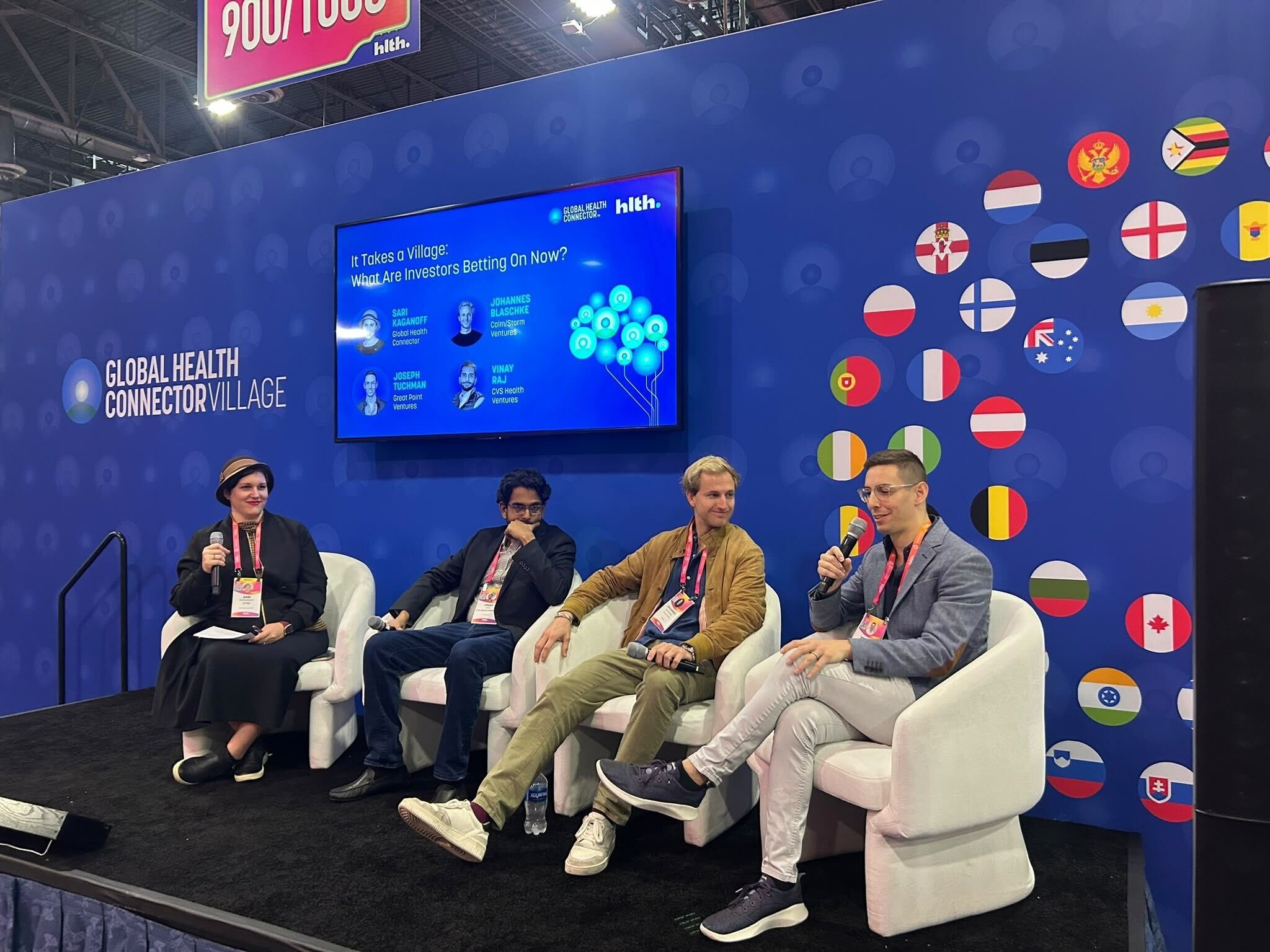
At HLTH USA this November, at the Global Health Connector Village stage, I moderated a panel with three investors who cover every stage from pre-seed to IPO. Joseph Tuchman is a partner at GreatPoint Ventures. Johannes Blaschke is a partner at Calm/Storm, an early-stage healthcare fund in Vienna. Vinay Raj is a principal at CVS Health Ventures.
Their shared message: much of what venture learned over the last ten years no longer holds. Here are the four shifts that stood out.
1. Moats are out. Why you win is in.
Investors used to back a moat, often a technical moat, something that gave a company a few years head start. With AI, a product can be built quickly, and copied even faster. Investors now see the same ideas pitched again and again.
So the question has changed. "The question is not what is your differentiation or what is your moat, but why are you going to win relative to someone else?" Joseph said. The answer usually starts with the team’s experience and data they have access to.
At the earliest stages, that puts the weight on people. Johannes estimates that more than 90% of each early deal is a bet on the founders. What hasn't changed is the kind of founder he wants: obsessed, driven and resilient.
2. The clock sped up
Teams build faster, so investors expect more, sooner. Even pre-seed companies are expected to be further along.
The real squeeze comes after the first million in revenue. Big funds now expect companies to grow from $1M to $10M about five times faster than before. That means roughly 12 months. Johannes didn't sugarcoat it. "Which is crazy."
Customers have sped up too, and they ask about outcomes sooner. Corporate investors are moving earlier as well.
3. Access to capital is divided
Kingmaking isn't new. What's new is how polarized it has become. A few companies raise hundreds of millions on an idea, and the money itself seems to protect them. On the flip side, many early-stage companies can't raise at all.
The panel expects some of the top end to come back to earth. Not many companies go from zero to a billion, and when the cash runs out, some won't justify their next round. However, in many healthcare fields the winner takes most logic holds pretty well. Customers are hard to win but sticky once won, so distribution often beats the best product.
For early stage founders, there's another path. Vinay was clear that you can build a world-changing business without venture capital. Joseph shared a striking example from his recent founder conversations: two companies are building the same AI workforce product. One is close to an idea and raising hundreds of millions at a multibillion-dollar valuation. The other bootstrapped, started with services, and reached about $50M in revenue in nine months without raising a penny. His bet is that founders who raise when they want to, not when they need to, come out ahead.
4. The labs won't do the hard parts
Can a frontier lab wipe out your startup in one release? It’s a legitimate concern and Joseph admitted the labs could do almost anything they want over the next decade. However, he points out that we’ve seen this story before. Eighteen years ago, Google looked set to own everything, healthcare included. The consensus is that while the frontier labs will create infrastructure, they will likely not get all the way into the nitty gritty of every aspect of healthcare.
Vinay put it more bluntly. "Our industry is about eating nails and sometimes doing way more work for way lower margins." Automating a task is easy. Taking on the liability clinicians carry is not. That last stretch of hard, low-margin work is where health tech companies win, and it's also the hardest to copy.
The takeaway for founders
The ground that holds is the hard, unglamorous work of healthcare, and that's where the panel expects lasting companies to be built.
Their parting advice to founders: Decide early whether venture is the right route (bootstrap if you can!), stay focused, and keep talking to customers.
Sari Kaganoff, CEO, Aytza
Distilled from a live panel conversation at HLTH USA 2026. Quotes lightly edited for clarity.